Safeguarding in our Curriculum
Find out how we teach and promote safeguarding and living a safe and healthy life here at Hazel.
Click each section below to expand for information.
In Computing lessons, safeguarding is a central thread that runs throughout the curriculum in all year groups. All children complete designated E-Safety Units that are carefully planned in for each year group. Children either learn the content in PSHE or Computing depending on what is most appropriate. Helping children to understand and manage potential risk whilst online in their own lives, as well as at school, is a key priority in order to help our pupils to be ready for their next stage of education as well as for life in the real world. For instance, pupils are taught the importance of password protection, how to report abuse online and the dangers of communicating with strangers whilst online, whether this is through gaming, messaging or via social media platforms. Children also learn about parental control and we communicate regularly with parents as new trends, that could present a risk to children’s safety, become popular.
Digital Leaders in Years 2–6 support children to keep safe online and take their roles and responsibilities seriously in weekly computing lessons.
In addition, we provide signposting for parents should they become worried about their children’s safety online or if they think their privacy/personal information may have been compromised. Many resources are shared with parents in order to support them in this.
We have developed a supportive and positive relationship with the local community police, who regularly meet with senior leaders as well as children and parents to offer advice regarding many aspects of online safety. The Safeguarding Team meet weekly and swiftly address any online safety concerns that have occurred either at home or in school.
As an added layer of safety, we use SENSO to monitor students’ computer use whilst using school devices. The school has prioritised offering the children a full-time IT Manager to oversee children’s safety online whilst in school and at home.
Safer Internet Day is celebrated every year at Hazel.
Each year, all children take part in Safer Internet Day which incorporates themed assemblies, poster competitions and a wide variety of learning activities across all year groups throughout the day. Information and learning from this event is shared via the school website, our social media feed, and in the weekly newsletter, enabling parents and families to receive the same messages as their children and encouraging them to check their own online safety at home and discuss such issues with their children.
NSPCC Childline Assembly
The work of the NSPCC is shared with children during the year in a designated assembly which informs our pupils about the NSPCC Childline and how, when or why they might need to use it.
Through the ‘Speak Out, Stay Safe’ programme, we help our children to understand:
- abuse in all its forms and how to recognise the signs of abuse
- that abuse is never a child’s fault and they have the right to be safe
- where to get help and the sources of help available to them

Our Year 6 children visit the Warning Zone in Leicester, where they are taught about managing personal risk through a variety of realistic scenarios. The areas covered include such things as fire safety, the perils of playing by railway lines or building sites, staying safe by water, arson, alcohol and e-safety.

The school has devised a bespoke PSHE curriculum that meets the needs of the children, the families and the local community. Children are taught to identify a network of trusted adults and, importantly, how to approach adults when they need to talk. Hazel Helpers (our pupil leadership team) have devised a ‘Hazel Guide’ to staying safe which includes information in child-friendly language to support children to speak up. The school has built strong links with the local policing team who visit termly. Children know that they are part of our trusted adult network. The children also learn how to talk to trusted adults in Friday Time, which is an opportunity to discuss safeguarding generally.
Children’s safety in and out of school is a key priority at our school and therefore we have taken the decision to explicitly teach children how to stay safe on the local roads by taking the children out in classes. The road safety lessons involve children looking for hazards and crossing safely at different points. These sessions revisit the clear messages taught in the whole-school assembly incorporating the Clever Never Goes’ message. To further ensure the safety of children, Hazel Helpers run ‘FriYay’ during Road Safety Week where children can buy reflective bands and hi-vis jackets to wear in the darker months and in the evenings.
Furthermore, children take part in many visits throughout the year in History and Geography whereby they learn about the local area in detail. When on these visits, road safety forms an important aspect of the learning.

As part of our curriculum offer, children are taught to safely use balance bikes in Reception and this is built on in Year Six where all children are given Learn to Cycle sessions and / or Bikeability sessions. The Bikeability sessions allow children to learn how to cycle safely within the school grounds before being taken onto the local road network under the supervision of highly-trained cycling instructors. This takes part over Road Safety Week annually. Cycling safely is actively encouraged in our school and we have invested in a safe bike storage area so that the children know their bike is safe and cared for. Children are expected to wear a helmet to cycle to / from school and this is encouraged through giving the children golden tickets for staying safe.
We regularly ask children for their views about how safe they feel in and around school through a questionnaire. This helps us to see what the children understand about staying safe, and what we need to prioritise in the future. In order to promote the questionnaire, we deliver an assembly, helping the children to understand the importance of completing it honestly, and explaining to them that we want to hear their views and will act upon them, if at all possible, because their safety is our priority.
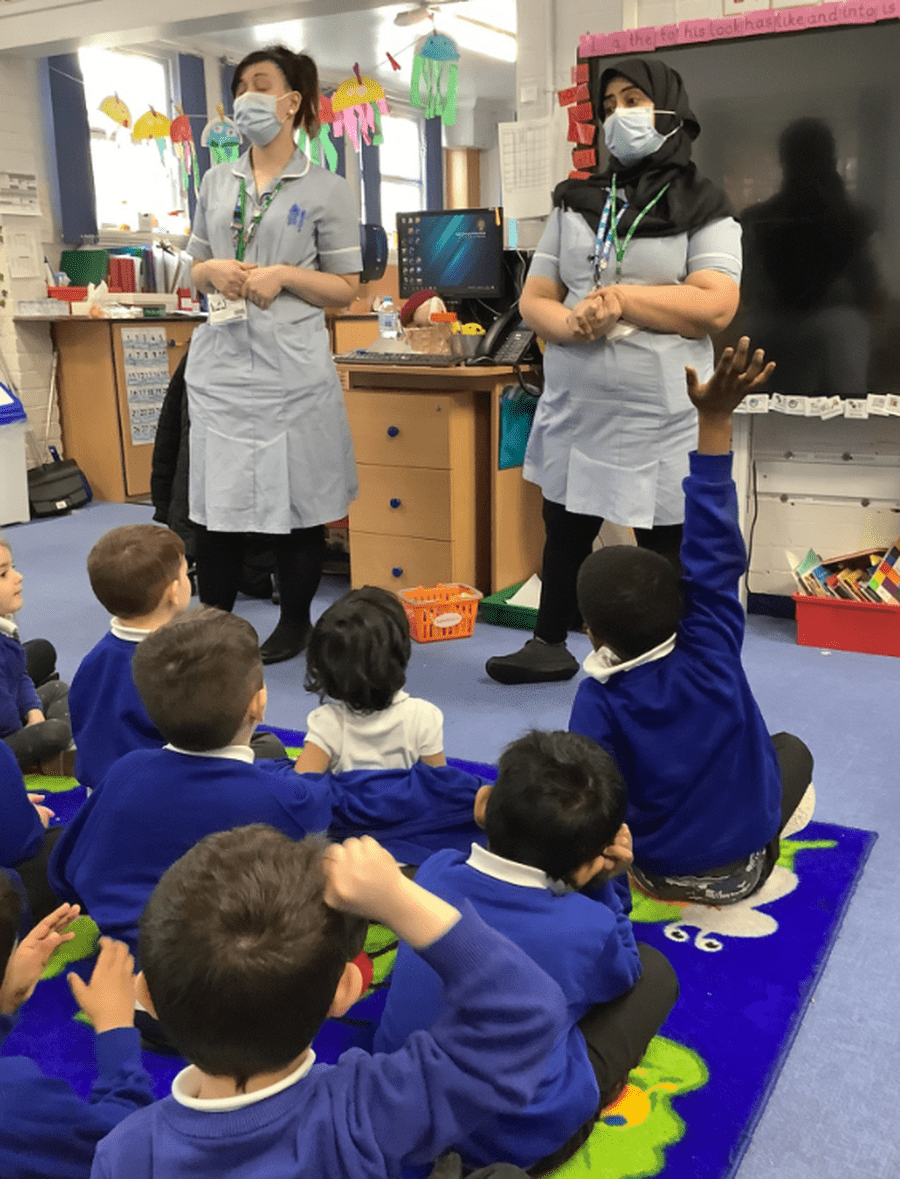
Throughout the year, we have a varied programme of professional visitors to school which is specifically designed to promote children’s safety and wellbeing. This starts with our very youngest children who enjoy visits from dentists and nurses, helping them to understand how to look after their teeth and the importance of a healthy diet and exercise.
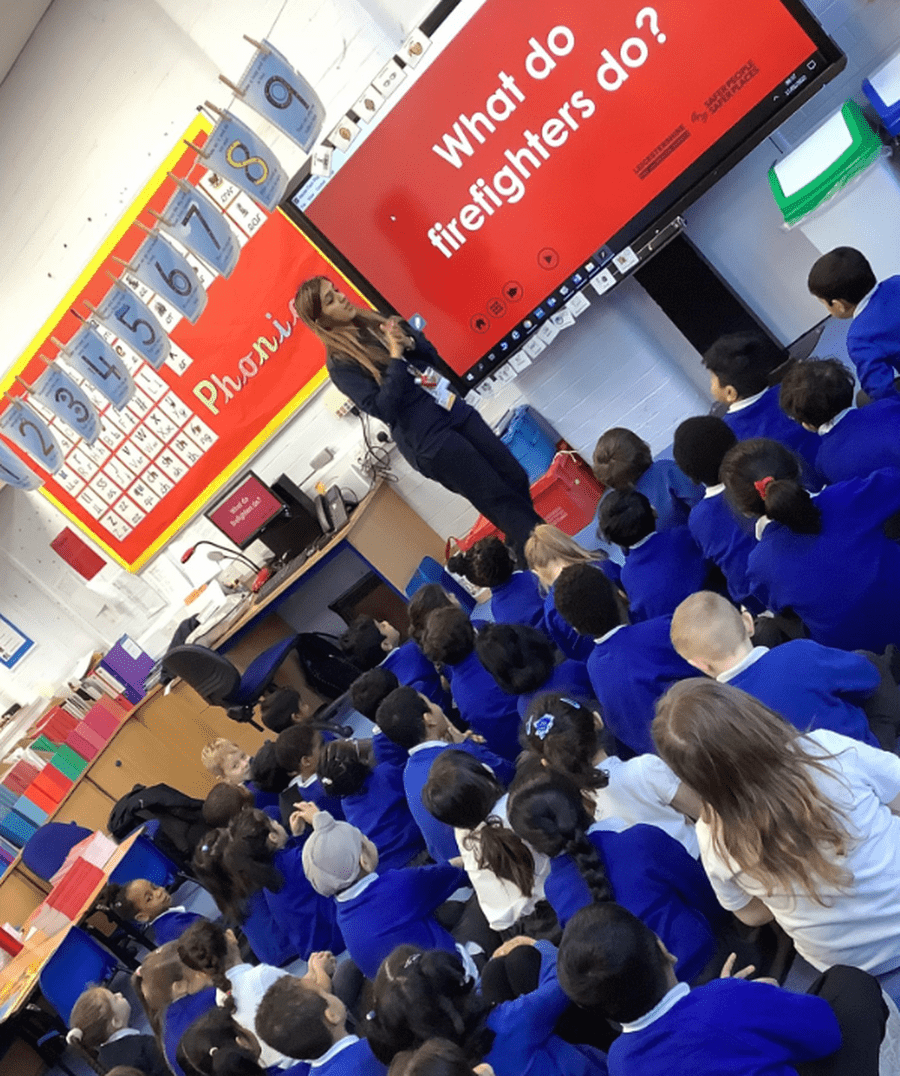
Children learn about fire safety and the work of the Fire Service through their regular visits to our school, complete with their fire engine. This positive relationship with local emergency services is key in building confidence and trust on the part of the children, ultimately increasing their personal safety as they gain an understanding of how and where to seek help in an emergency.
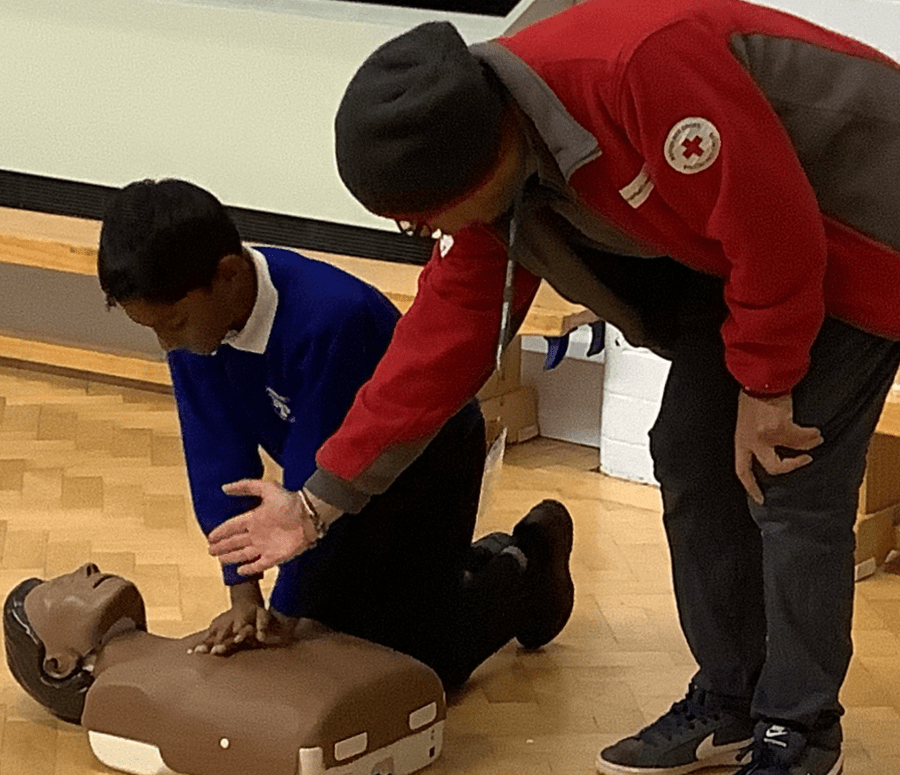
Children in Year 6 receive training in First Aid, including giving CPR, from the Red Cross. This is an important life skill for the children at the point in their lives where they are likely to be spending longer periods away from home, in the neighbourhood, without adult supervision.
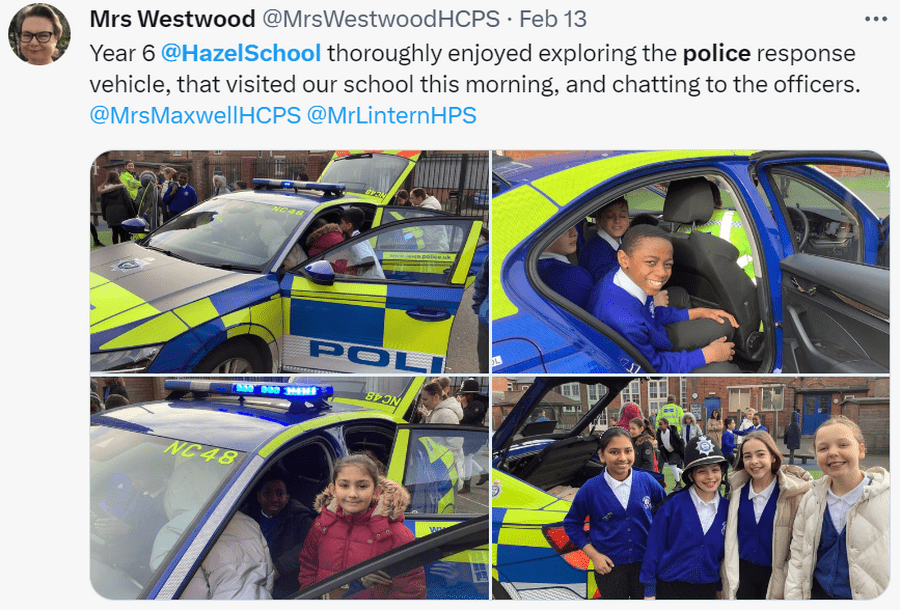
We have a very good relationship with our local community policing team. PCSO's regularly visit the school and support on local visits. The police vehicles and equipment are often brought into school for children to explore and investigate.
We understand the importance of building a positive image of policing teams in children's lives.

Children in Year 5 receive expert swimming tuition at the local leisure centre in order to equip them with the skills they need to be safe and confident in water. Children who need additional swimming lessons in order to swim 25 metres unaided are then targeted in Year Six to ensure they are given this important skill before leaving primary school. Year Six visit The Warning Zone where one of the units covered is water safety. Children also visit the beach in Hunstanton as part of their geography learning in Year 2 where they are taught water safety in a real-life situation.
|
Personal, Social, Health and Economic education. We have statutory responsibilities to promote pupil well-being and pupil safeguarding (Children Act, 2004) and community cohesion (Education Act, 2006). PSHE Education plays an important part in fulfilling all of these responsibilities. We regard PSHE as an important component of the whole curriculum. We believe that the promotion of health and well-being is central to the life of the school and its relationships with the surrounding community. Our PSHE curriculum has two aims for our children - To build their capacity for learning - To equip them for life Our lessons brings together PSHE Education, emotional literacy, mindfulness, social skills and spiritual development. They embody a positive philosophy and creative teaching and learning activities to nurture children’s development as compassionate and well-rounded human beings as well as building their capacity to learn. From September 2020 onwards, primary schools in England were required to teach Relationships and Health Education as compulsory subjects and the Department for Education strongly recommends this should also include age-appropriate Sex Education. Schools also have statutory responsibilities to safeguard their pupils (Keeping Children Safe in Education, DfE, 2021) and to uphold the Equality Act (2010). Our PSHE curriculum supports all of these requirements and has children’s wellbeing at its heart. We ensure that the fundamental British values are strongly embedded and promoted through our PSHE whole-school approach and through everyday aspects of school life. Curriculum organisation Our PSHE curriculum is organised into six half-term units. Every year group studies the same theme at the same time allowing for themes to be shared and celebrated by the whole school. Each year group is taught one lesson per week and all lessons are delivered in an age- and stage-appropriate way so that they meet children’s needs. Being Me In My World covers a wide range of topics, including a sense of belonging, welcoming others and being part of a school community, a wider community, and a global community; it also looks at children’s rights and responsibilities, working and socialising with others, and pupil voice. Celebrating Difference focuses on similarities and differences and teaches about diversity, such as disability, racism, power, friendships, and conflict; children learn to accept everyone’s right to ‘difference’, and most year groups explore the concept of bullying – what it is and what it isn’t, including cyber and homophobic bullying. Dreams and Goals aims to help children think about their hopes and dreams, their goals for success, what personal strengths are, and how to overcome challenges, via team work skills and tasks. There is also a focus on enterprise and fundraising. Children learn about experiencing and managing feelings of pride, ambition, disappointment, success; and they get to share their aspirations, the dreams and goals of others in different cultures/countries, and their dreams for the world. Healthy Me covers two main areas of health: Emotional health (relaxation, being safe, friendships, mental health skills, body image, relationships with food, managing stress) and Physical health (eating a balanced diet, physical activity, rest and relaxation, keeping clean, drugs and alcohol, being safe, first aid) in order for children to learn that health is a very broad topic. Relationships has a wide focus, looking at diverse topics such as families, friendships, pets and animals, and love and loss. A vital part of this Puzzle is about safeguarding and keeping children safe; this links to cyber safety and social networking, as well as attraction and assertiveness; children learn how to deal with conflict, their own strengths and self-esteem. They have the chance to explore roles and responsibilities in families, and look at stereotypes. Changing Me deals with change of many types, from growing from young to old, becoming a teenager, assertiveness, self-respect and safeguarding. Self and body image, puberty, attraction and accepting change are diverse subjects for children to explore. Each year group thinks about looking ahead, moving year groups or the transition to secondary school. Life cycles and how babies are made and grow are treated sensitively and are designed to meet children’s needs. All year groups learn about how people and bodies change. This links with the science curriculum when teaching children about life cycles, babies and puberty. |